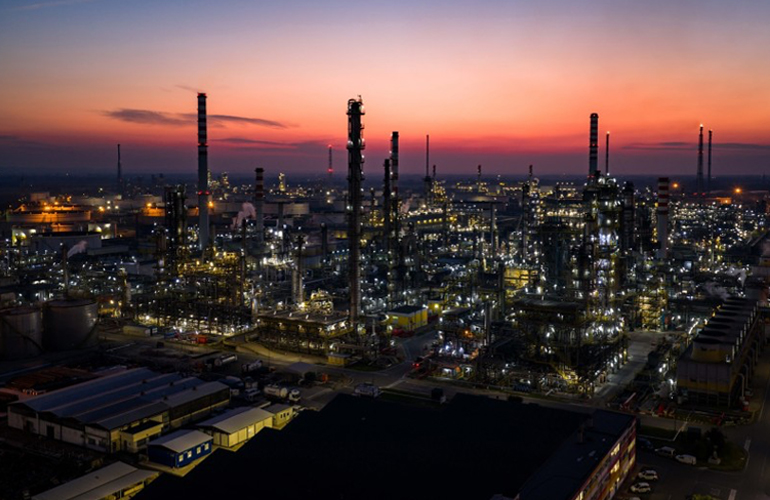
Italian global oil and gas major Eni S.p.A. has announced a further important strategic investment in biorefining. In addition to the recently announced Priolo project on Sicily, the final investment decision (FID) has also been approved for Eni's plan to convert certain units of the Sannazzaro de’ Burgondi refinery in Pavia, Lombardy, into a biorefinery.
According to Eni, both projects represent a significant step forward in developing Enilive’s biofuel production capacity.
The two biorefineries will be completed by 2028 and will offer maximum flexibility in producing both renewable diesel (Hydrogenated Vegetable Oil – HVO) and sustainable aviation fuel (SAF).
The new biorefinery in Sannazzaro de’ Burgondi will not affect the plant’s existing traditional fuels production capacity.
Instead, it will introduce additional biofuel production from renewable raw materials, further diversifying the range of products available to the market.
Hydrocracker conversion
The project involves the conversion of the hydrocracker two (HDC2) unit using Ecofining technology as well as the construction of a pre-treatment unit for waste and residues, which are the main feedstocks used by Enilive to produce its hydrogenated biofuels.
The hydrogen required will be supplied by existing plants, while supporting infrastructure, including logistics and connections to airports in Lombardy, will be adapted for the new production setup.
Extensive operational flexibility
The new biorefinery in Sannazzaro de’ Burgondi will have the capacity to produce 550,000 tonnes per annum of renewable fuels, with the flexibility to produce SAF or renewable diesel.
The Priolo biorefinery, for which preparatory activities are underway ahead of the award of procurement and construction contracts for the new units, will have a capacity of 500,000 tonnes per annum and will also have extensive operational flexibility for the production of renewable diesel or SAF, in line with market dynamics and demands.
The Priolo biorefinery is part of Versalis’ basic chemicals transformation plan and will be built within the existing site, replacing the cracking plant that ceased operations last year, and that is currently being dismantled.
Through Enilive, Eni is the second largest producer of hydrogenated biofuels – renewable diesel (HVO), and SAF – in Europe and plans to increase its biorefining capacity from the current 1.65 million tonnes per annum to over 3 million in 2028 and over 5 million in 2030, with the potential to produce up to 2 million tonnes of SAF by 2030.