Australia-headed biotech developer Leaf Resources Ltd has announced that it has achieved an important qualification milestone in the progression towards a successful validation of its proprietary Glycell process.
According to incoming Cheif Executive Officier, Alex Baker, these developments represent an important milestone, as the Glycell technology package has now been validated in a pilot facility for the first time as an integrated process. Leaf is on track to complete the study by the end of June 2019, with further information for the bankable feasibility study to be released starting April 2019.
Leaf partnered with Bioprocess Pilot Facility (BPF) in Delft, the Netherlands, to undertake a series of Integrated Demonstration Studies (IDS) which incorporate the necessary engineering and hardware components in pilot scale testing.
The pilot testing is a critical component of the overall validation program for the technology and an essential input to both the design and financing requirements for the company’s proposed biorefinery project in Malaysia.
Leaf has successfully completed the first two phases of the IDS process, with the completed second phase producing samples of C6 industrial sugars and lignin. The phase 3 design will continue into the first quarter of 2019 to optimise the equipment and processes in an integrated, continuous fashion.
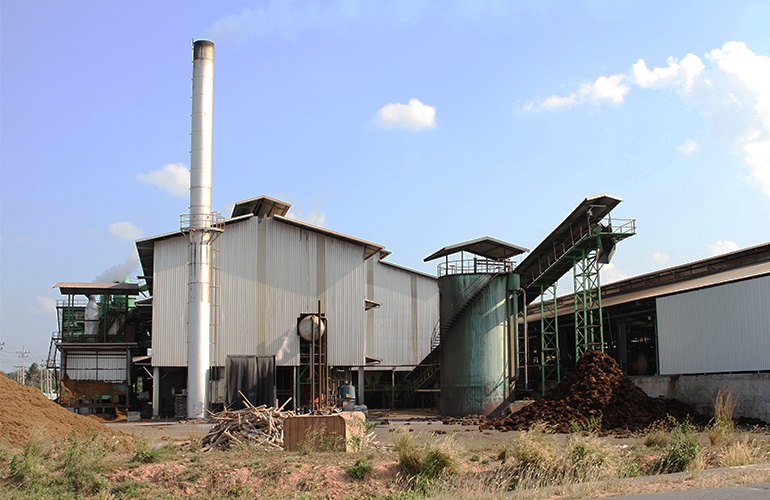
Prepared Empty Fruit Bunch (EFB) from Leaf’s partner in Malaysia has been milled to specification, pre-treated under proprietary conditions, and further processed through filtration, chromatographic separation, and hydrolysis. EFB biomass has been separated into its constituent products with separated streams of clean industrial sugars produced as a result, explained Alex Baker.