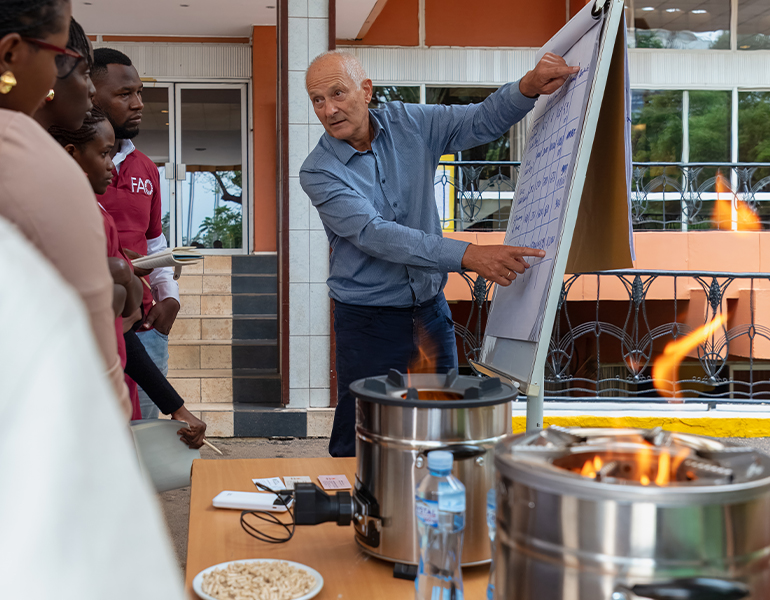
The Modern Cooking Facility for Africa’s (MCFA) Annual Results Report 2025 highlights that over 100,000 people in Sub-Saharan Africa gained access to clean, modern cooking solutions in 2025. MCFA-supported companies have also mobilised over EUR 37 million of private and public co-financing, confirming MCFA’s catalytic role.
The Modern Cooking Facility for Africa (MCFA) is a multi-donor facility established and managed by Nefco – the Nordic Green Bank – with the aim of supporting the development of new markets for the clean cooking sector and accelerating access to high-technology, modern and affordable cooking equipment for consumers in Sub-Saharan Africa.
The results underscore MCFA’s role in accelerating market-based clean cooking solutions that deliver climate, health and gender equality benefits, while mobilising further investments.
By the end of 2025, the MCFA programme had built a project portfolio of 22 companies, to which it had committed more than EUR 34 million in financing.
The MCFA-supported companies sold over 26,000 clean cooking services, bringing clean cooking access to over 178,000 people across Kenya, Tanzania, Zambia and Zimbabwe between 2023 and 2025.
Through its results-based financing and technical assistance, MCFA continued to promote the scale-up of clean cooking businesses in Sub-Saharan Africa.
Despite a challenging global context, MCFA remained firmly focused on its mission to bring clean cooking solutions to people in Sub-Saharan Africa. The 2025 results show that a market-driven approach, combined with targeted technical assistance, can deliver real and sustained impact for households, businesses and institutions, said Heli Sinkko, Fund Manager of MCFA at Nefco.
Significant benefits
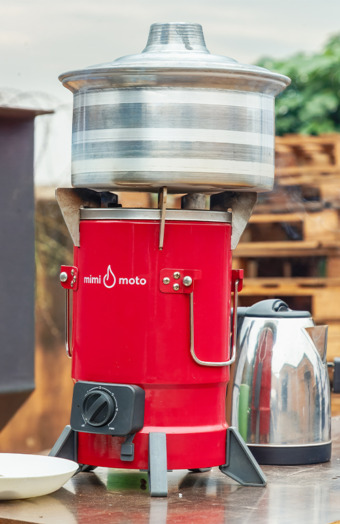
Since 2023, the clean cooking services established by MCFA portfolio companies have avoided nearly 70,000 tonnes of carbon dioxide equivalent (CO2eq) emissions, reduced deforestation and provided an estimated 32.5 million hours in time savings, particularly benefiting women, who typically have primary responsibility for household cooking.
In 2025, over 68 percent of clean cooking services were purchased by women as primary customers.
A defining feature of MCFA’s approach is its robust impact management and verification system, which links results-based payments to evidence of sustained stove and fuel use over time.
In 2025, MCFA further strengthened its digital monitoring framework by integrating portfolio company data into the open-source Prospect platform.
Regular payments by clients using stoves serve as a proxy indicator of sustainability. This allows us to move beyond counting sales and focus on whether clean cooking solutions are actually being used over time, said Petra Mikkolainen, Senior Monitoring, Evaluation & Learning Manager at Nefco.
Lessons learned
The Annual Results Report also includes lessons learned to date. It highlights MCFA’s growing emphasis on gender-inclusive business models, improved credit management practices and increasing carbon market readiness among portfolio companies, recognising carbon finance as a key driver of long-term growth when implemented in line with high-integrity standards.
Looking ahead, MFCA says that 2026 will mark a “shift towards full implementation across all contracted projects, alongside greater knowledge generation for the wider clean cooking sector.”