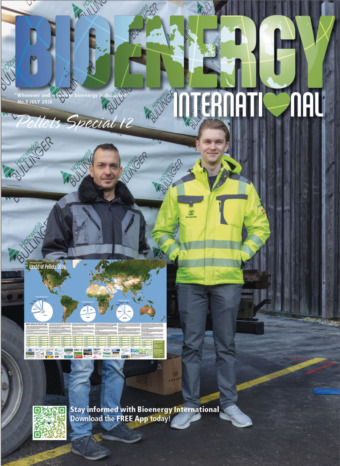

The Methanol Institute (MI) has partnered with Finland’s GENA Solutions Oy (GENA) on the development of a robust database of the biomethanol and e-methanol projects pipeline. As of April 2025, the database tracks 220 renewable methanol projects globally, with a total announced anticipated capacity of 37.1 million tonnes (Mt) by 2030.
The total projected capacity of all e-methanol projects is 20.6 Mt by 2030, while the total capacity of all biomethanol projects is 16.5 Mt, respectively.
In addition to the announced renewable methanol projects, the database also tracks another 16 low-carbon or “blue” methanol production projects, totaling 10.1 Mt of capacity by 2030.
The total renewable and low-carbon methanol project pipeline comprises 47.2 Mt by 2030.
Considering barriers and challenges in project development, MI estimates that renewable methanol capacity will likely be in the range of 7-14 million tonnes by 2030 or 19-38 percent of the project pipeline.
Project Navigator Methanol
In the methanol industry, GENA has conducted studies on over 500 renewable and fossil fuel plants and projects globally.
The analysis methodology involves a diligent examination of technologies, material balances, costs, emissions, schedules, commercial, and financial strategies for every facility within the comprehensive database.
The project statistics encompass projects from pre-feasibility to operational stages, excluding closed or frozen projects, as well as concept-stage projects.
As of April 2025, GENA’s Project Navigator Methanol tracks 236 renewable and low-carbon methanol plants and projects, including:
- 131 e-methanol plants and projects with a total capacity of 20.6 Mt;
- 89 biomethanol plants and projects with a total capacity of 16.5 Mt;
- 16 low-carbon methanol plants and projects with a total capacity of 10.1 Mt.
Five projects were added in the current release, including two in Europe, two in China, and one in Latin America.
Several projects have modified their capacities, including one that substantially increased its capacity and two that decreased theirs.
As a result of new additions and capacity modifications, the total renewable methanol project pipeline increased by 0.9 Mt in April, comprising 0.4 Mt of e-methanol and 0.5 Mt of biomethanol.
Key takeaways from the April 2025 release of the Project Navigator Methanol:
- The renewable methanol project pipeline increased from 36.2 Mt in March 2025 to 37.1 Mt in April 2025 (+0.9 Mt). The total renewable and low-carbon methanol project pipeline reached 47.2 Mt.
- Seventy-five projects with a total capacity of 15.2 Mt plan to use biomass or waste gasification to produce methanol. This includes 37 hybrid projects (9.2 Mt) that combine syngas from gasification with renewable hydrogen from electrolysis. The first industrial-scale hybrid projects are expected to become operational in 2025.
- About 56 percent of gasification projects use agricultural residues as the main feedstock, 15 percent use forestry residues, 15 percent use RDF/SRF, and the remaining projects use mixed feedstocks.
- If operating at full capacity, all renewable methanol projects could consume up to 4.9 Mt of renewable hydrogen—4 Mt in e-methanol and 0.9 Mt in hybrid biomethanol production. About 97 percent of methanol projects opt to produce hydrogen captively.
- At full capacity, renewable and low-carbon methanol projects could utilize up to 29.8 Mt of carbon dioxide (CO2).
- The total after final investment decision (FID) renewable methanol capacity, including operational facilities and projects under construction, has reached 3.5 Mt. Additionally, after FID, low-carbon methanol capacity stands at 0.5 Mt. About 75 percent of biomethanol and 85 percent of e-methanol projects are still in the feasibility or pre-feasibility stages.
- By 2030, renewable methanol capacity could reach 7.2 Mt in the Advanced Projects scenario, 13.6 Mt in the Higher Probability Projects scenario, and 3.5 Mt in the After-FID Projects scenario.